Introduction
While Kyoto is famous for its autumn colors, Shiga offers equally breathtaking spots—often with fewer crowds and a peaceful atmosphere. Located just next to Kyoto, this region is perfect for day trips and hidden discoveries.
🍁 Kongourin-ji Temple(金剛輪寺)– A Fiery Tunnel of Autumn Leaves
Kongourin-ji is one of the Koto Sanzan — the “Three Great Temples of Eastern Lake Biwa” — renowned for their spectacular autumn foliage. Nestled in the quiet countryside, this ancient Tendai Buddhist temple is surrounded by hundreds of maple trees that transform the stone stairs into a vivid tunnel of red and orange in autumn.
While it’s a bit farther from Kyoto, renting a car and touring all three Koto Sanzan temples is highly recommended if you enjoy driving. If your budget allows, hiring a private car service for the day can also offer a relaxing and convenient experience.
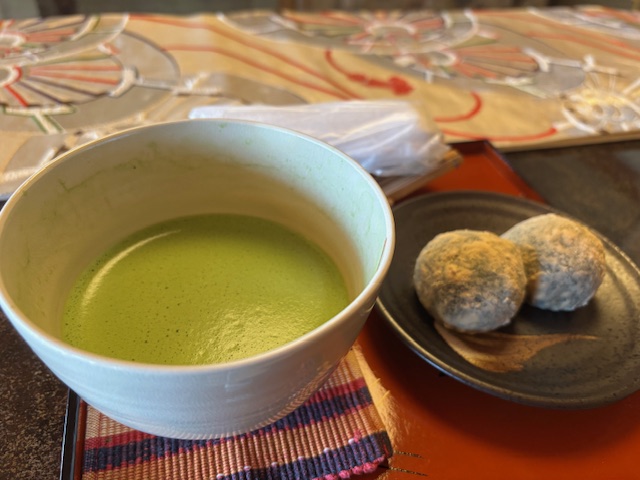
Some temple grounds even offer traditional sweets like amazake (sweet sake) or zenzai (sweet red bean soup) to enjoy during your visit.
Access: Take the Ohmi Railway to Echigawa Station, then a short taxi or bus ride.
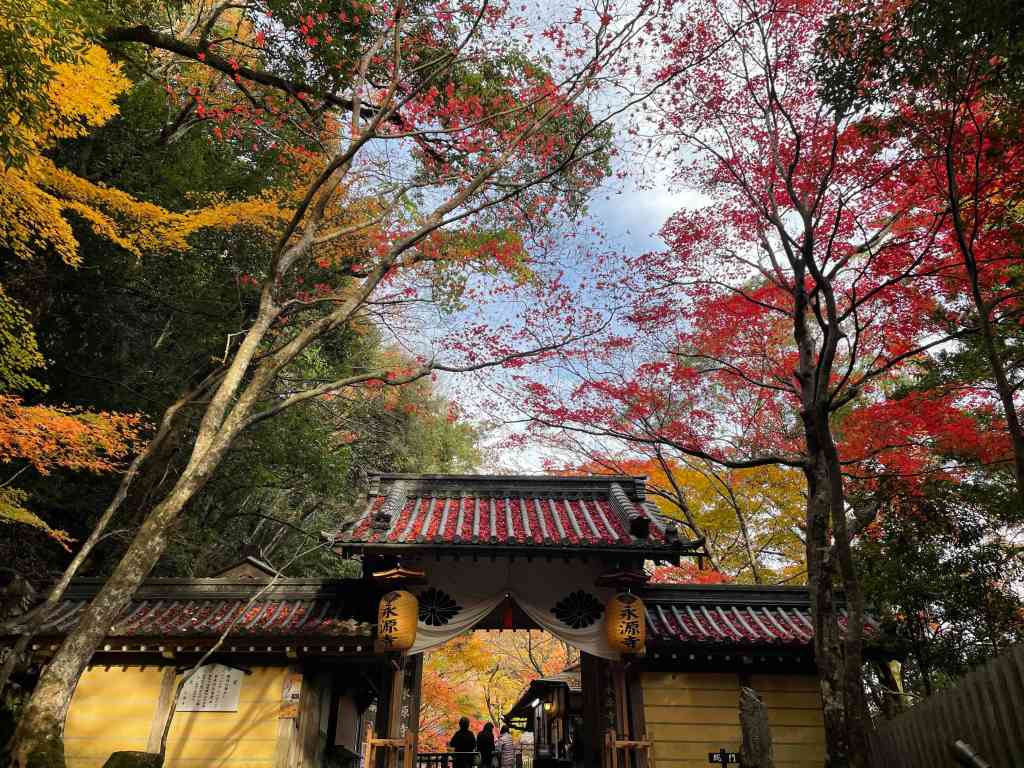
🍁Eigen-ji Temple(永源寺)
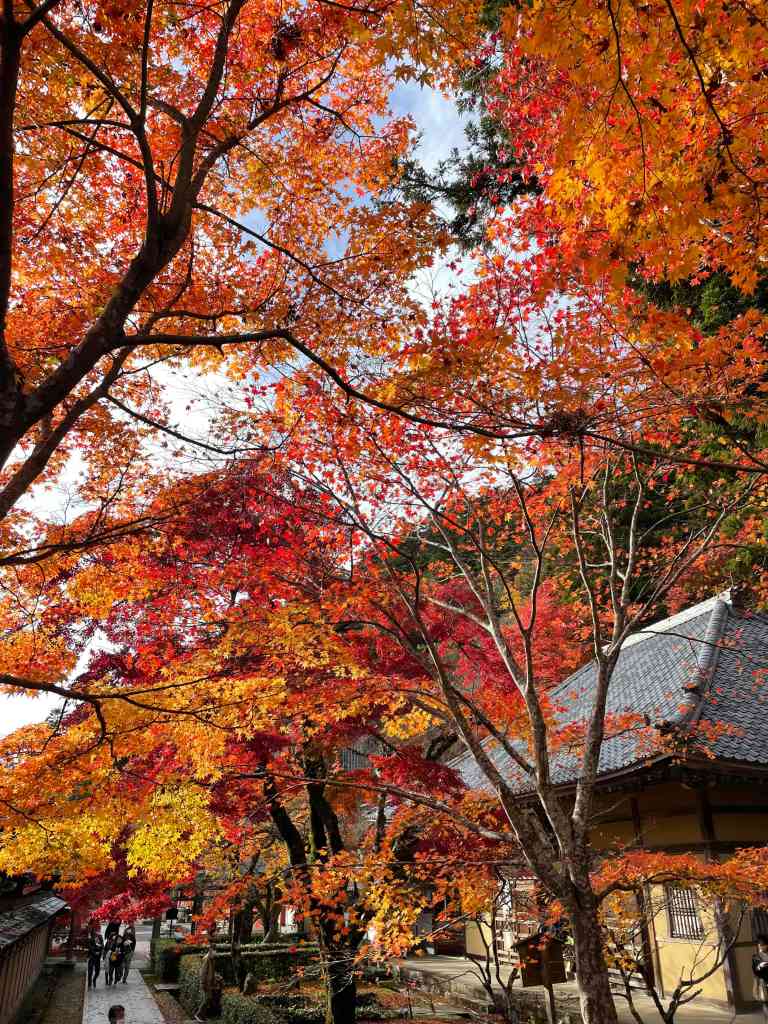
Eigen-ji Temple is a peaceful Zen temple of the Rinzai sect, nestled deep in the mountains of Higashiomi, Shiga. Located near the famous Koto Sanzan temples (Kongorin-ji, Hyakusaiji, and Saimyo-ji), it’s renowned for its breathtaking autumn foliage.
During the peak season in early to mid-November, the path from the main gate to the temple is surrounded by fiery red maple leaves, creating a stunning tunnel of color. The tranquil atmosphere and mountain setting offer a perfect retreat from the bustle of city life. In some years, night illuminations are also held, revealing a magical scene.
The area is also famous for Aka Konnyaku (red konjac jelly) — it looks red but tastes like regular konjac. If you’re lucky, you might find it sold near the entrance and ready to eat on the spot.
Another autumn specialty is matsutake mushrooms, which are also sold in the area. Note that some may be imported (e.g., from China), so be sure to check the label if you prefer domestic products.
Thanks to its proximity to the other Koto Sanzan temples, Eigen-ji makes an excellent stop on a full-day autumn foliage driving tour.
Access: About 35 minutes by bus from Yokaichi Station (Ohmi Railway). During the autumn season, special buses may operate.
🍁 Miidera Temple (三井寺)
Miidera, also known as Onjoji Temple, is the head temple of the Tendai Jimon sect. It boasts a spacious temple complex dotted with historical buildings and Buddhist statues, making it a serene and culturally rich place to explore throughout the seasons.
The temple grounds are quite expansive, so if you plan to stroll around and enjoy the scenery at a relaxed pace, allow at least an hour and a half. There are many stone steps, so comfortable walking shoes are recommended! Inside the temple, you’ll also find a traditional dumpling shop — perfect for a short break on a sunny day.
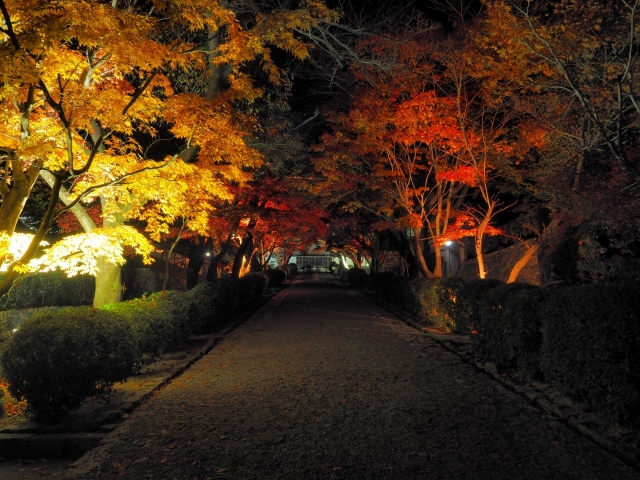
Miidera is also a popular filming location for Japanese TV dramas and movies, thanks to its atmospheric beauty. In autumn, the vibrant foliage is illuminated at night, creating a magical and otherworldly experience.Its convenient location near Kyoto makes it ideal for a day trip.
Access: Just a short walk from Keihan Miidera Station.
🍁 Saikyoji Temple (西教寺)– A Temple of Akechi Mitsuhide

Located at the foot of Mt. Hiei in Sakamoto, Otsu City, Saikyoji Temple is the head temple of the Tendai Shinsei sect. Surrounded by tranquil nature, it’s a peaceful and historically significant destination, especially beautiful in the fall.
This temple is most famous for its connection to Akechi Mitsuhide, a notable samurai of the Sengoku period. Mitsuhide originally served Oda Nobunaga but later turned against him in the famous Incident at Honnōji, a dramatic betrayal that changed the course of Japanese history. Though often labeled a traitor, he is also remembered as a compassionate and wise ruler, making him a legendary figure whose legacy is still debated.
Within the temple grounds, you’ll find the graves of the Akechi family. During the autumn season, the brilliant red foliage adds to the solemn and mystical atmosphere of the temple—a perfect place for those seeking quiet reflection and a glimpse into Japan’s dramatic past.
From Saikyoji Temple, you can take a 30-minute walk to Hiyoshi Taisha Shrine. The stroll is ideal for enjoying both the historical ambiance and the natural beauty of the area.
Access:The most convenient way to reach Saikyoji Temple is by public transport combined with a short walk or taxi ride.
- Nearest Stations:
- Keihan Railway: Sakamoto-Hieizan-guchi Station
- JR Line: Hieizan-Sakamoto Station
- From the Station:
- Approx. 30-minute walk from Sakamoto-Hieizan-guchi Station (includes an uphill slope)
- Around 10 minutes by taxi from Hieizan-Sakamoto Station
- Parking: Free parking is available for visitors, but it may fill up during peak seasons.
During the autumn foliage season, the area can get crowded, so it’s best to plan ahead and allow extra time for your visit.
🍁 Hiyoshi Taisha(日吉大社)
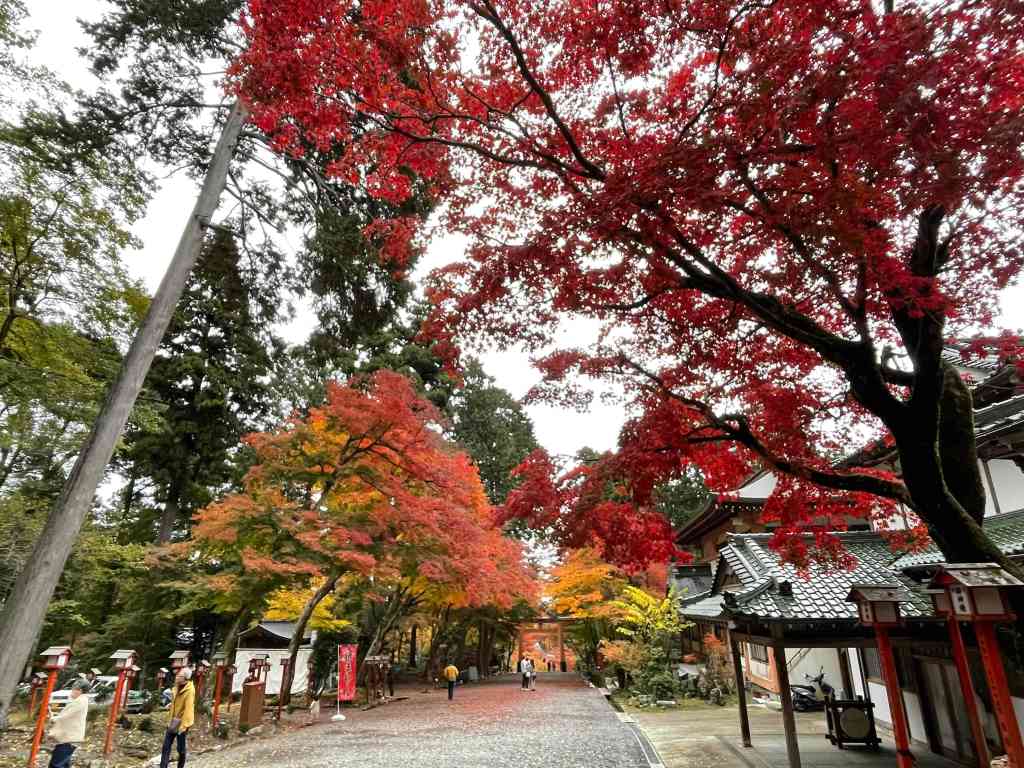
Hiyoshi Taisha, located in Sakamoto, Ōtsu, is the head shrine of over 3,800 Hiyoshi, Hie, and Sannō shrines across Japan. With a history dating back approximately 2,100 years, the shrine sits at the foot of Mt. Hiei and is deeply connected to the spiritual culture of the region.
In autumn, the grounds transform into a breathtaking canvas of red and gold, with vivid maple leaves surrounding the East and West Main Halls—both designated as National Treasures. The buildings showcase the rare architectural style known as Hie-zukuri, which is unique to this shrine.
A special highlight of Hiyoshi Taisha is its connection to monkeys, considered sacred messengers. The shrine is home to live monkeys, which visitors can observe near the entrance. These “Masaru” monkeys are believed to symbolize protection and good luck—“Masaru” being a play on words for “to overcome evil” and “to win.”
Access:If you’re coming from Kyoto, the simplest and most convenient way is to take the JR Kosei Line and get off at Hieizan-Sakamoto Station, then walk to the shrine.
- By Car::
- About 20 minutes from the Otsu IC on the Meishin Expressway.
- Free parking is available at the shrine.
- By Train:
- Approx. 10-minute walk from Keihan Sakamoto-Hieizanguchi Station.
- Approx. 20-minute walk from JR Hieizan-Sakamoto Station.
- Opening Hours:
Typically 9:00 AM – 4:30 PM, but may vary depending on the season or special events. - Admission Fee:
Around ¥300–¥500 for adults (subject to change depending on exhibitions or temple areas open).
🚉 Alternative Scenic Route via Keihan Railway
If you’re okay with a few transfers, there’s another enjoyable route from Kyoto Station.
Take a JR train one stop to Yamashina Station, and transfer to the Keihan Line.
- From Yamashina, board the Keihan train bound for Biwako-Hamaotsu Station – this is the last stop on that line.
- At Biwako-Hamaotsu, transfer to the Keihan Sakamoto-Hieizanguchi Line and ride to Sakamoto-Hieizanguchi Station, which is also a terminal station.
From there, it’s only about a 10-minute walk to Hiyoshi Taisha Shrine, and the path from the station is lined with beautiful autumn foliage, especially during the fall season.
There are also a few charming soba noodle restaurants and small cafés near the station. One of the soba shops, in particular, has a long history and a very traditional atmosphere—a great place to stop for a local meal before or after your shrine visit.
🍁 Biwako Valley – A Stunning Resort Overlooking Lake Biwa
Biwako Valley is a mountain resort located near the summit of the Hira Mountains in Shiga Prefecture. At 1,100 meters above sea level, it offers breathtaking panoramic views of Lake Biwa — Japan’s largest lake — from the famous Biwako Terrace.
If you’re lucky on a clear morning in autumn or winter, you may even witness a sea of clouds (unkai) below, making it feel like you’re floating in the sky.
From spring to fall, enjoy hiking, mountain activities, and relaxing at the café. In winter, the area transforms into a popular ski resort.
🚡 Ropeway
A high-speed ropeway takes you from the base station to the top in just about 5 minutes. During the ride, you can enjoy sweeping views of the lake and the surrounding mountains — it’s a scenic journey in itself.
☕ Biwako Terrace
Once at the summit, unwind at the stylish Biwako Terrace, where you can sip coffee while soaking in spectacular lake views. It’s the perfect spot for a tranquil escape.
Access :
- About 10 minutes by taxi from JR Kosei Line stations (Shiga or Hōrai)
- Around 40 minutes by car from Kyoto East IC (parking available for a fee)
- Ropeway ride from the base to the summit takes approx. 5 minute
Bonus Tip: If you’re looking to enjoy winter sports beyond Biwako Valley, consider visiting Grand Snow Okuibuki — the largest ski resort in the Kansai region. Despite Kansai generally having lighter snowfall, Okuibuki is known for its higher snow accumulation, and on good days you can even experience powder snow. I often go there myself — the slopes are pleasantly uncrowded on weekdays, and there’s a convenient shuttle bus from Maibara Station, making access easy and stress-free.



 Shiga Travel Guide
コメントを残す